Garden Clearance Blackwall — Recycling and Sustainability Commitment
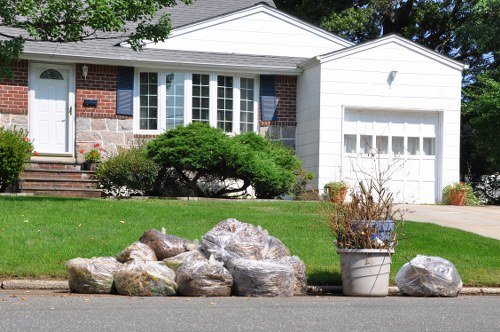 At Garden Clearance Blackwall we prioritise an eco-friendly waste disposal area and a truly sustainable rubbish area for every job. Our approach to garden clearance in Blackwall balances practical removal with responsible end-of-life treatment for waste streams from small domestic gardens to larger communal green spaces. We emphasise re-use, repair, composting and material recovery, taking cues from local borough policies and the wider London push toward circular, low-carbon services.
Our service mirrors borough-level waste separation methods used by local councils such as Tower Hamlets and neighbouring boroughs: segregating green waste, dry recycling (paper, card, plastic, metal and glass), and encouraging food-waste composting where possible. We work alongside existing collection systems rather than duplicating them, aiming to reduce contamination of recyclable materials and ensuring that wood, soil, plastics and metals are processed at the right facilities.
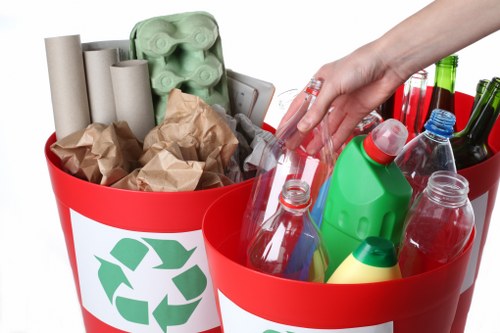 We set a clear, measurable target for our operations: a recycling percentage target of 75% by 2028 for all garden clearance collections in the Blackwall area. That target covers material reuse, organics diverted to composting or bioenergy, and items passed to reuse partners. Interim milestones include achieving 55% within 12 months and 65% within 36 months, with quarterly audits and transparent reporting to clients and partners.
Local Transfer Stations and Sustainable Processing
We consolidate loads at carefully selected local transfer stations and materials recovery facilities (MRFs) that use low-energy sorting lines and have robust contamination controls. These transfer hubs are within short driving distances of Blackwall and include council-authorised sites and independent depots that accept segregated green, timber, metal and inert wastes. Minimising haul distances is a key part of our low-carbon strategy.
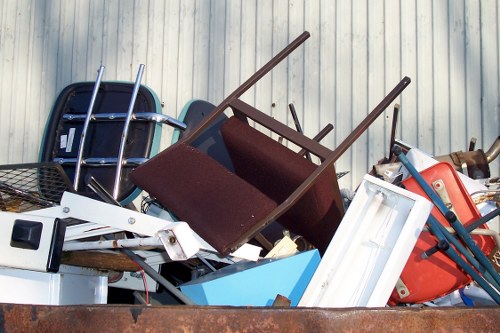 Our partnerships with regional transfer stations enable us to route garden soil, wood chippings and green cuttings to authorised composting sites, timber recyclers and reprocessing centres rather than to landfill. Where soil and inert materials are clean, they are directed to reuse in landscaping projects; timber is chipped and supplied to local biomass or community mulching schemes.
We actively maintain partnerships and networks to increase reuse and reduce landfill. Typical collaborations include:
- Local charities accepting good-condition outdoor furniture, planters and tools
- Community gardens and allotment groups that use compost and reclaimed wood
- Specialist recyclers for metal, garden plastics and construction-type wastes
Charity Partnerships, Reuse and Community Benefit
We pride ourselves on practical charity partnerships that give items a second life. Strong links with local non-profits mean that salvageable items from clearances — such as planters, timber sleepers, metal gates and usable tools — are cleaned, repaired and redistributed. This emphasis on reuse reduces pressure on the residual waste stream and supports community projects in and around Blackwall.
 Our collaboration model includes donation agreements, scheduled drop-offs to community hubs, and periodic bulk handovers to social enterprises that refurbish garden items. Where items cannot be reused, we prioritise material recycling over disposal: wood to chipping, metals to smelters, plastics to specialist processors and soil to approved restoration sites.
 To reduce the carbon footprint of collections we operate a fleet of low-carbon vans and trucks. That fleet includes electric vans for short urban rounds and Euro 6 diesel vehicles with particulate filters and route-optimisation software for heavier loads. Our drivers are trained in eco-driving techniques and vehicle loading practices to maximise efficiency and reduce emissions per job.
Operationally, we track performance with a combination of digital weighbridges, load manifests and photographic documentation. Each job includes categorisation of materials removed and an indication of destination: compost, reuse partner, MRF or authorised disposal. This transparency helps measure progress toward the recycling percentage goal and informs continuous improvement.
We also align with local recycling behaviours: encouraging residents to pre-sort where possible, to separate garden waste from mixed refuse and to set aside salvageable items for charity collection. The borough approach to waste separation — food and garden organics, dry recycling streams and residual waste — is mirrored in our sorting bays to avoid cross-contamination and to achieve higher recovery rates.
In sum, Garden Clearance Blackwall commits to an eco-friendly waste disposal area as part of every clearance and to creating a truly sustainable rubbish area where materials are valued as resources. Our recycling targets, local transfer station partnerships, charity collaborations and low-carbon vehicle fleet form a practical roadmap for greener garden clearances in Blackwall and its neighbouring communities.